Every renter with a pet door eventually faces the same date: move-out day, and the inspection that comes with it. If the pet door was fitted the renter-friendly way, this is a non-event. The insert lifts out, or the original glass goes back in, and the door is exactly as it was on move-in day. This guide covers pet door removal when moving out for both fitting methods, step by step.
The key fact was established on installation day: nothing was drilled, nothing was cut, nothing permanent was done. Move-out is simply that fact being demonstrated. Plan it two weeks before handover and the inspection becomes a formality.

Removing a silicon-only insert
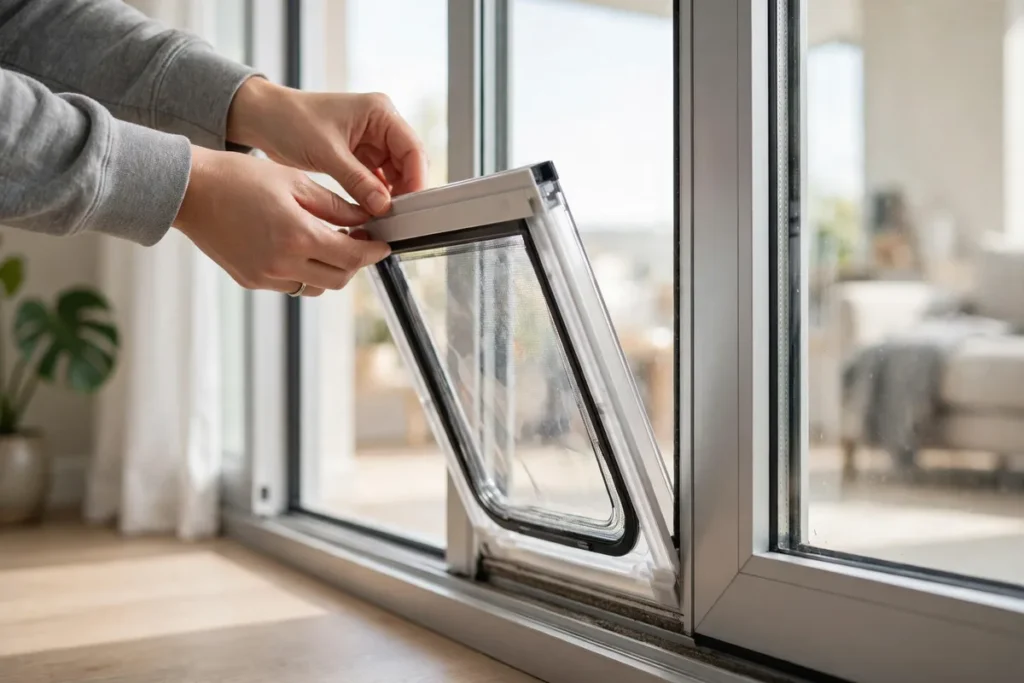
This is the five-minute version. The insert panel lifts out of the sliding door track. The silicon bead peels away with a blade, in strips, leaving the track and frame clean. A wipe with a cloth takes off any residue. The sliding door closes against the frame exactly as it did before the insert existed.
There is nothing to repair because nothing was damaged. No holes to fill, no paint to touch up, no frame sections to replace. The track may want a vacuum along its length, since tracks collect dust with or without an insert, but that is ordinary cleaning, not restoration. Most tenants do this removal themselves on the last weekend.
If the silicon has been in place for years, use a plastic scraper rather than a blade on coated frames, to avoid scratching the finish. Work slowly along the bead and it releases in strips. Any faint residue wipes off with a cloth and a little silicon remover. The track underneath is invariably fine, because silicon never bonded to anything it could damage.
Reversing a replacement glass panel
The panel reversal needs the installer, so it gets booked, not improvised. The replacement panel with the pet door comes out of the frame. Your original glass panel, stored since installation day, goes back in. The weather strip along the interlock comes off. The door is exactly as it was.
The critical dependency is the stored panel. It has been sitting upright, labelled, somewhere safe for the whole tenancy. Before the reversal booking, check it: intact, clean, ready. If it was stored properly, the swap is as routine as the original installation. If it was damaged in storage, that becomes a glazier’s problem to solve before handover, which is why the two-week lead time matters.
Timing it before the inspection
Book the reversal one to two weeks before the handover inspection. Not the day before, not the morning of. The buffer covers the ordinary frictions of moving: the installer rescheduling, the stored panel needing a clean, the track wanting attention after years of use.
The order of operations on the final week runs: pet door reversed, flat deep-cleaned, inspection. The inspector should see a door that was never touched, because in every sense that counts, it wasn’t. The pet door’s absence should be unremarkable, which is the highest compliment a renter-friendly fitting can earn.
If the tenancy is ending mid-summer, book even earlier. Installers run busiest when everyone is preparing villas for the hot months, and a week’s buffer can become two. The reversal itself is quick; the scheduling is what needs the lead time.
The deposit question
Deposits get deducted for damage and unapproved alterations. A renter-friendly pet door is neither. The insert altered nothing. The panel swap restored everything. The door the landlord leased is the door the landlord gets back, and there is no line item for a fitting that left no trace.
Keep the paperwork. The installer’s invoice shows the method: silicon-only, or original panel stored. Dated photographs from installation day show the door’s before state. In the rare case of a dispute, this file ends it. In the common case, the inspector looks at the door, sees a normal door, and moves on.
Deposit disputes in the UAE usually centre on cleaning and minor repairs, not on fittings that were never alterations. A pet door handled the renter-friendly way does not enter that conversation. The inspector’s checklist covers damage, and there is nothing to tick.
Taking the pet door to the next place
The insert moves with you. It is a standalone panel, so the next apartment’s sliding door track decides whether it drops straight in or needs adjustment. Track widths vary between towers, so expect a re-measure at minimum and a re-make at most. Either is cheaper and faster than starting from zero.
A replacement glass panel does not move with you. It was made to the millimetre for one specific door, and the next apartment’s door will have different measurements. The pet door flap itself can sometimes be reused in a new panel, which the installer can confirm. Budget for a fresh survey and a new panel at the new place, and store the lesson, not the glass.
Each tenancy restarts the landlord conversation, and this time you arrive with evidence. The previous flat’s door was restored without issue. The method is documented. The insert or the stored-panel approach is a known quantity, not a proposal. Landlords respond to precedent, and you now have it.
Bring the same facts as the first time: silicon-only means nothing is altered, or the original panel is stored for restoration at move-out. Add the new fact: you have done this before, and the last inspection passed clean. Most landlords approve faster the second time than the first.
Move-out day is the final exam for a renter-friendly pet door, and the fitting was designed to pass it. If you fitted yours the no-damage way, the process is booked, brief and boring. Read how the pet door process works for renters from the start, and the next tenancy begins with the pet door already planned.
Keep reading: Renter-Friendly Pet Doors: The No-Damage Guide, the full playbook from fitting to move-out.
FAQ
What happens to a silicon-only insert at move-out?
The insert lifts out of the track, the silicon peels away with a blade, and the track wipes clean. Minutes of work, zero trace left behind.
What happens to a replacement glass panel at move-out?
The installer removes the replacement panel and reinstalls your stored original glass. The weather strip comes off. The door is exactly as it was on move-in day.
Can the original glass really go back in?
Yes, and that is the point of the method. The original panel was removed intact on installation day, stored for the tenancy, and reinstalled at move-out.
Will I lose part of my deposit over the pet door?
Nothing was drilled, cut or altered, so there is nothing to deduct for. The door the landlord leased is the door the landlord gets back.
When should I schedule the removal?
Book the reversal a week or two before handover, so the door is restored before the inspection, not during it.
Can I take the pet door to my next rental?
The insert moves with you: it is re-measured or adjusted for the new track. A replacement panel is made for one door, so the new place usually needs a fresh survey.