
Most UAE residents rent, and most rental contracts say the same thing about alterations: don’t. That single clause stops thousands of pet owners from fitting the door their cat or dog clearly wants. renter-friendly pet doors exist precisely for this situation. They give your pet its own entrance without changing a single thing that belongs to your landlord.
No-damage is not a marketing phrase here. It is a fitting method with a testable result: at move-out, the door is exactly as it was on move-in day. No holes, no cuts, no replacement parts the landlord didn’t ask for. This guide covers the two methods that pass that test.

Method one: the silicon-only insert
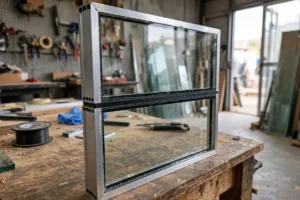
An insert is a slim aluminium-framed panel that slides into the track of your sliding door, carrying a cat flap or a small dog door at the bottom. It is fixed with silicon only. No screws into the frame, no brackets, no drilling. The silicon bead holds the panel rigid for years and peels away cleanly with a blade when the time comes.
Once fitted, your sliding door closes against the insert instead of the far frame. You still slide the door open and closed daily. The walk-through gap for people narrows by the width of the insert, which is the trade-off. In return, nothing belonging to the landlord is altered in any way, and at move-out the insert lifts out in minutes.
Inserts suit cats and small dogs. Cat flaps in manual and microchip versions fit, including the large size for cats over 4.5 kg. For dogs, a Medium flap at 23 by 35 cm can work depending on the track. Larger dogs need the second method.
Track width decides the flap size more than anything else. The installer measures the visible track channel at the survey, and that number determines whether your pet’s flap fits. Standard UAE sliding door tracks take cat flaps comfortably and Medium dog flaps in most cases. If a track is unusually narrow, you hear about it at the survey stage, before anything is ordered.
Method two: the stored original panel
The full replacement panel is also renter-safe, because of what happens to the original glass. On installation day your existing panel is removed intact and handed to you for storage. It is never cut and never drilled. The new panel, with the pet door built in, takes its place. At move-out, the original goes back in and the door is exactly as it was.
This method suits any flap size, including Large (28 by 45 cm) and Extra-large (36 by 65 cm) dog doors that cannot fit an insert. The finish is cleaner than an insert, since the pet door sits in a factory-made panel rather than a track addition. The renter’s responsibility is one thing: keep the original panel stored upright and undamaged for the whole tenancy.
Landlord inspections look for alterations: holes, cuts, replaced components, damage. Both methods pass because there is nothing to find. The insert leaves no mark when the silicon is removed. The panel swap leaves the original door restorable to factory state, which is better than untouched in the only sense that matters: the landlord gets back exactly what they leased.
Document the before state. Photograph the door on installation day, keep the original panel labelled in storage, and keep the installer’s paperwork. If a question ever arises, you have dated evidence that the door was handled properly. Most questions never arise, because there is nothing visible to question.
Sealing still matters in a rental
A no-damage fitting still has to perform as a door. The insert is sealed with silicon around its edges, and a weather strip runs along the interlock where the sliding panels meet, closing the gap against heat and dust. The weather strip is sometimes included in the offer and sometimes added separately for AED 250. Confirm which applies before installation day.
Renters sometimes assume a temporary fitting means a draughty one. It doesn’t. The seal is part of the fitting either way, and a properly sealed insert keeps the cooled air in just like a permanent panel. Your electricity bill cannot tell the difference.
The landlord conversation
Tell your landlord before you book, not after the installer arrives. The conversation is short when you bring the facts: nothing is drilled or cut, the fitting is silicon-only or the original panel is stored, and the door is restored at move-out. Most landlords approve inserts on the spot, because there is nothing to restore.
Panel replacements take slightly more explaining, since the word replacement sounds permanent. The key fact is the stored original: the door they leased is sitting in your storage room, intact, ready to go back in. Put the restoration in writing if the landlord wants reassurance. It costs nothing and ends the discussion.
Move-out day, step by step
For an insert: lift the panel out of the track, peel the silicon with a blade, wipe the track clean. Minutes of work, zero trace. For a panel swap: book the installer for the reversal, the new panel comes out, the original goes back in, the weather strip comes off. The door is exactly as it was on move-in day.
Either way, the deposit logic holds. The landlord’s property was never altered, so there is nothing to deduct for. That is the entire point of renter-friendly fitting: your pet gets years of freedom, and move-out day is uneventful.
Photograph the restored door as well, so the file is complete: before, during, after. If the tenancy used a panel swap, the replacement panel goes back to the installer or into storage, and the flap hardware can often be reused in a future panel. Either way, the property record shows a door that was never altered.
Renting is not a reason to wait. Look at the renter-friendly pet door options, check whether your pet fits an insert or needs a panel, and have the landlord conversation this week. The fitting takes hours. The freedom lasts the whole tenancy.
Keep reading: Pet Doors for Rental Apartments, the apartment-specific version of this guide.
FAQ
What makes a pet door renter-friendly?
A pet door fitted without altering the landlord’s property: no drilling, no cutting, no permanent changes. When you move out, the door is exactly as it was on move-in day.
What is a silicon-only insert?
A slim panel that slides into the sliding door track carrying a cat flap or small dog door, fixed with silicon only. It lifts out at move-out with no trace.
Can I get a full glass panel replacement as a renter?
Yes. The original glass panel is removed intact and stored. At move-out it goes back into the frame, and the door looks exactly as it did before.
Does the silicon damage the frame?
No. Silicon peels away cleanly from the track and frame. There are no screws, no brackets and no holes, so there is nothing for an inspection to find.
Does a rental insert keep heat and dust out?
Yes. The insert is sealed with silicon and a weather strip along the interlock, so cooled air stays in and dust stays out, just like a permanent installation.
Should I tell my landlord before installing?
Mention it before you book, and keep the facts ready: nothing is drilled or cut, and the door is restored at move-out. Most objections end there.