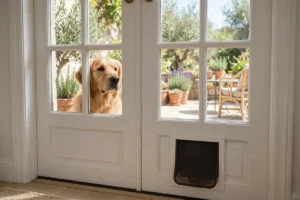
Apartment rentals run on a simple rule: leave everything as you found it. For pet owners, that rule has always clashed with the obvious need: the cat that wants the balcony, the small dog that needs the patio door. pet doors for rental apartments resolve the clash with fittings that reverse completely, so the tenancy rule and the pet’s needs stop conflicting.
The apartment case is actually the easiest version of this problem. Nearly every UAE apartment has a sliding glass door to the balcony, and the sliding door accepts both renter-safe methods: the silicon-only insert and the replacement panel with stored original glass. This guide covers which fits your situation.
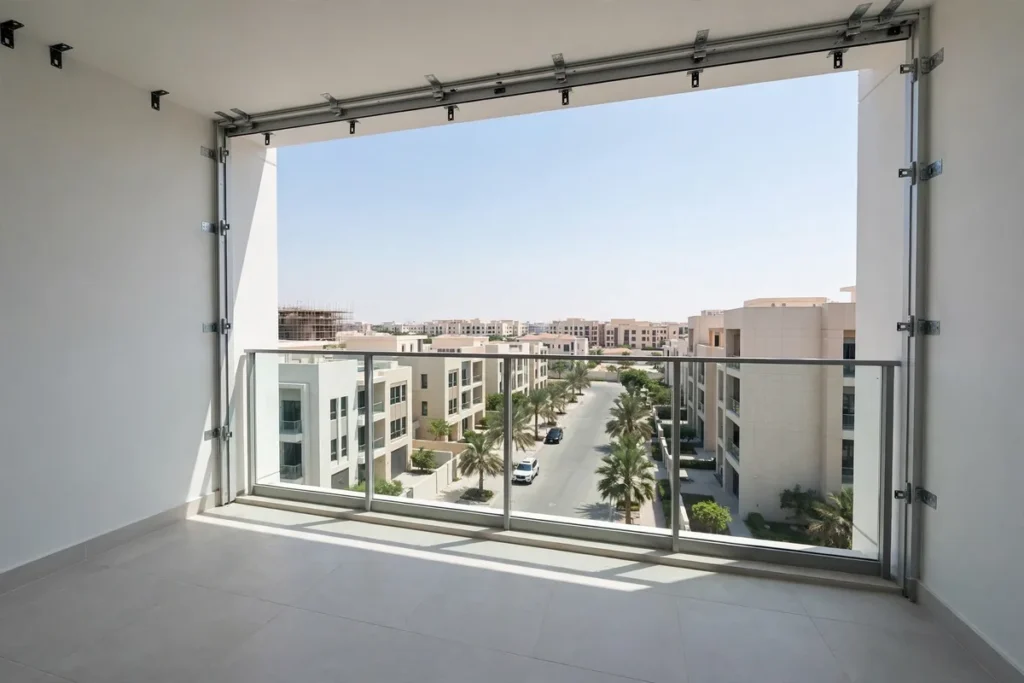
In a rental apartment, the door that matters is the sliding door to the balcony. It is the door your pet already waits at, and it is the door engineered for both no-damage methods. An insert slides into its track. A replacement panel swaps into its frame. No other door in the flat offers both options.
Windows are a fallback. A cat flap can go into a window’s glass panel by the same replacement method, with the original stored. But windows rarely lead anywhere a pet wants to go, and the balcony door leads exactly where every apartment pet wants to go. Start with the sliding door unless your layout says otherwise.
Option one: the silicon-only insert
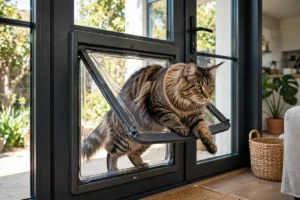
The insert is the fastest path. A slim aluminium-framed panel, measured to your track, slides in beside the existing door panel carrying a cat flap or small dog door. Silicon is the only fixing: a bead along the edges, no screws, no brackets, no holes. The door still slides open and closed against the insert.
What it fits: cats of all sizes, including the large flap for cats over 4.5 kg, and small dogs up to a Medium flap at 23 by 35 cm. What it costs you: a narrower walk-through gap for people, since the insert takes up part of the track. What it costs the landlord: nothing, because nothing of theirs is changed.
At move-out, the insert lifts out and the silicon peels away with a blade. The track wipes clean. The whole reversal takes minutes and leaves no trace, which makes the insert the easiest landlord conversation in this guide.
The insert also suits tenancies that restrict modifications to certain areas. The balcony door with a silicon-only insert typically falls outside every restriction, because alteration clauses usually require something to have been changed. Nothing changed means nothing to declare, though asking remains the polite move.
Option two: the replacement panel
The replacement panel is the fuller solution. Your balcony door’s glass comes out intact on installation day and goes into storage. A new panel, made to order with the pet door built in, takes its place. The door looks factory-finished, the flap can be any size, and the sliding and locking work exactly as before.
This is the method for larger dogs in rented apartments: Large (28 by 45 cm) and Extra-large (36 by 65 cm) flaps need the panel’s full glass area. It is also the method for owners who want the installation to disappear visually. The renter’s job is single and simple: store the original panel upright, labelled, somewhere safe for the whole tenancy.
At move-out, the installer reverses the swap. Original panel back in, new panel out, weather strip off. The door is exactly as it was on move-in day, which is the standard every deposit inspection applies.
Flap choice in an apartment tower
Apartment towers concentrate cats. Corridors, stairwells and neighbouring balconies all carry feline traffic, and a balcony cat flap is an invitation the neighbourhood will accept. Manual flaps in regular and large sizes work mechanically, with cats over 4.5 kg needing the large, but they admit any cat that pushes.
The microchip flap reads your cat’s implanted chip and unlocks only for programmed pets. In a tower, that is the difference between your cat’s private balcony door and a communal one. The flap runs on batteries, learns each chip in one pass-through, and needs no collar tag. For apartment cats, it is the recommended specification, not the upgrade.
Sealing, heat and the electricity bill
Both methods seal like permanent installations. The insert gets silicon around its edges; both methods get a weather strip along the interlock, the overlap where the sliding panels meet. The strip closes the gap against heat and fine dust.
The weather strip is sometimes included in the offer and sometimes added separately for AED 250. Confirm it by name before installation day. A rental fitting that leaks cooled air is not a bargain at any price, and the strip is the component that prevents it.
The landlord conversation, apartment edition
Apartment landlords and building managements hear modification requests regularly, and pet doors are among the easier ones when presented correctly. Lead with the reversal: silicon-only means nothing is altered, or the original panel is stored and reinstalled. Bring it up before booking, in writing if the building likes paper trails.
If the answer is a hard no on panel replacement, the insert usually still passes, because there is nothing to say no to. No alteration means no permission needed in most tenancy wordings, though asking remains the polite and safe move.
Get written approval, even a one-line email. It takes a day to obtain and it turns a verbal yes into a record. File it with the installer’s paperwork and the before photographs. If building management changes mid-tenancy, as happens in Dubai towers, the paper trail answers questions the new manager never needed to ask.
Apartment living does not suspend your pet’s needs. Review the pet door options for rental apartments, measure your track and your pet, and start the landlord conversation this week. The fitting takes hours, the reversal takes minutes, and the tenancy in between is the one where the cat finally gets the balcony.
Keep reading: Moving Out: What Happens to Your Pet Door, the move-out process in detail.
FAQ
Which door in a rental apartment suits a pet door?
The sliding door to the balcony. It takes a silicon-only insert or a replacement panel with the original glass stored, both fully reversible.
What is the simplest option for a rented apartment?
A slim panel that fits into the sliding door track with silicon only, carrying a cat flap or small dog door. It removes without a trace at move-out.
Can I have a proper glass panel fitted in a rental?
Yes. The original panel is removed intact and stored for the tenancy, then reinstalled at move-out. The door is exactly as it was.
Do I need landlord approval?
Mention it before booking. Bring the facts: silicon-only means nothing is altered, or the original panel is stored for restoration. Most landlords approve.
Which cat flap is best for an apartment?
Manual flaps in regular and large sizes, with cats over 4.5 kg needing the large. The microchip flap reads your cat’s implanted chip and keeps neighbouring cats out, which matters in apartment towers.
How does removal work at move-out?
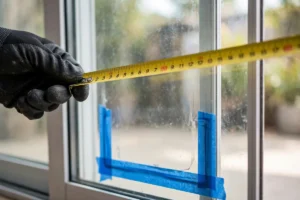
The insert lifts out in minutes and the silicon peels away. For a panel, the installer swaps the original glass back in. Either way the door is restored.