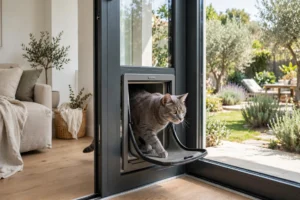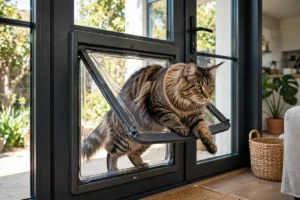

Cat flaps come in two sizes: regular and large. The line between them is your cat’s weight. This is the rule we fit by on every job, and it has never failed us.
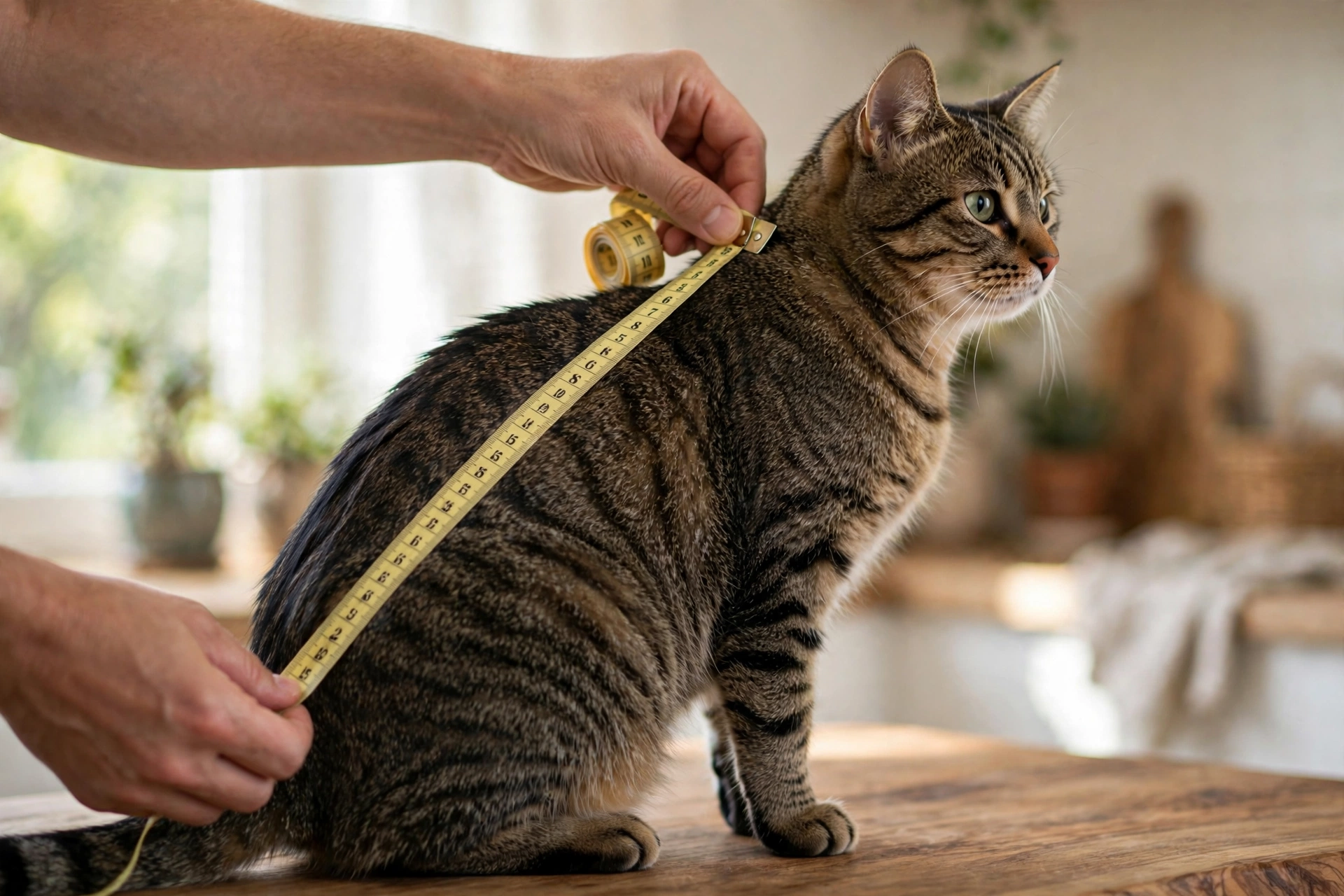
The 4.5 kg rule
Cats that weigh up to 4.5 kg use the regular flap. Cats over 4.5 kg use the large flap. Most adult domestic cats in the UAE fall between 3.5 and 4.5 kg, so the regular flap covers the majority of cats we meet.
The rule exists because of shoulder width. A cat pushes through the flap with its shoulders and chest. The regular opening measures 142 by 120 mm, which gives a 4.5 kg cat room to pass without brushing both sides. Above 4.5 kg, the chest gets wider than the opening allows, and the cat starts to squeeze.
A squeeze is not just uncomfortable. Cats remember it. A cat that has to force its way through will start avoiding the flap and asking to be let out instead, which defeats the purpose of fitting one.
How to weigh your cat
Stand on a bathroom scale holding your cat and note the number. Then weigh yourself alone. Subtract. The difference is your cat’s weight, accurate enough for choosing a flap.
Vet scales are more precise, but you do not need precision here. You need to know which side of 4.5 kg your cat sits on. A bathroom scale answers that in ten seconds.
If you visit the vet for vaccinations, ask them to weigh the cat while you are there. Write the number in your phone. It is useful for the fitter and for choosing the flap in one step.
Exactly 4.5 kg? Go large
If your cat weighs exactly 4.5 kg, choose the large flap. Weight shifts with seasons, food and age. A cat sitting on the line today may sit above it in six months, and you do not want to refit a flap.
The same goes for young cats that are still growing. If your nine-month-old already weighs 4.5 kg, it will cross 4.5 kg. Fit the large now and skip the second visit.
The actual openings
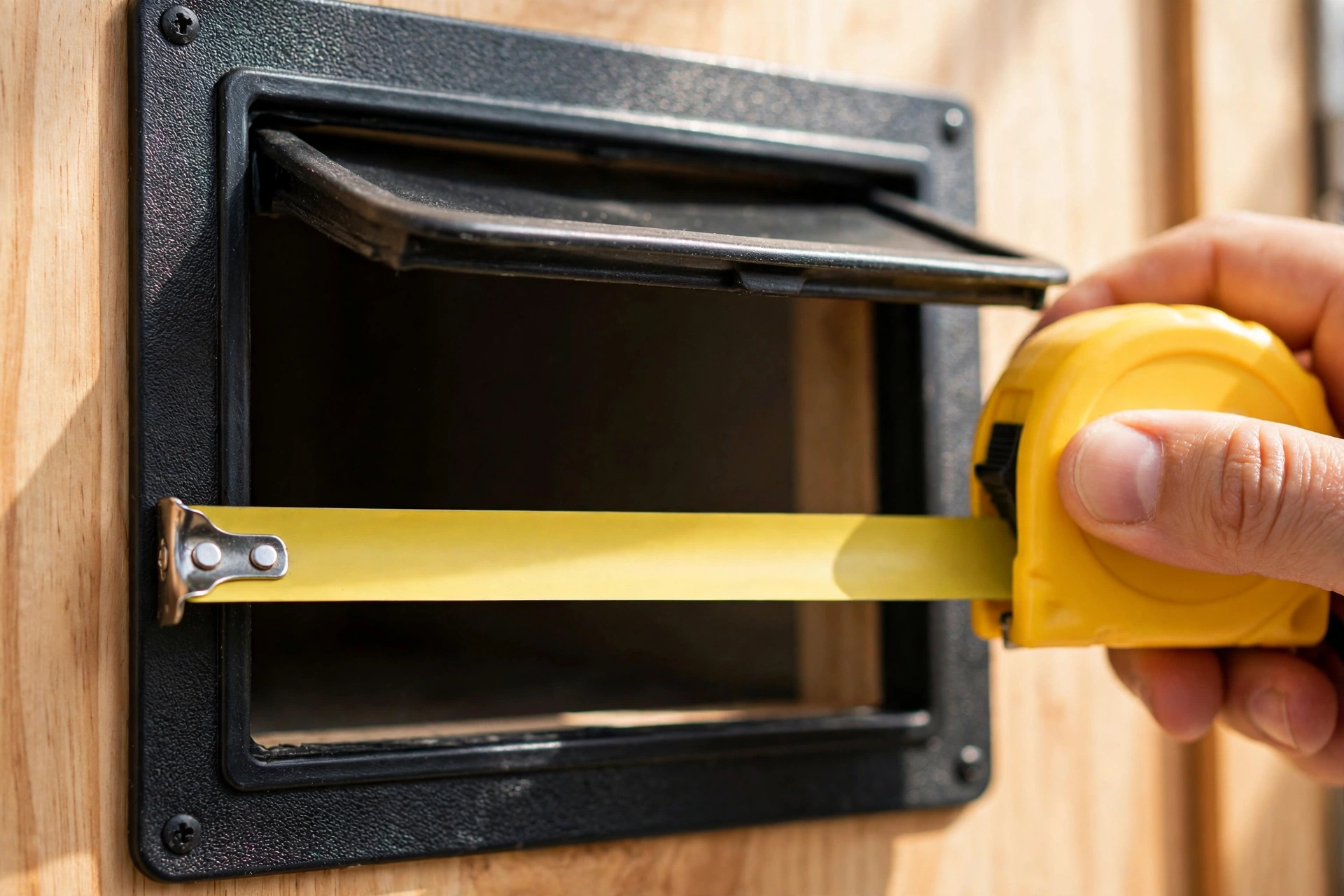
The regular flap opening is 142 by 120 mm. The large opening is 178 by 170 mm. Both suit the same glass panels and doors. The large simply needs a slightly bigger cutout in the new panel.
Neither size changes how the flap works. Both come in manual and microchip versions. Size is about the cat’s body, not the technology inside.

Fluff does not count
Long-haired cats look bigger than they are. A fluffy 4 kg Persian still fits the regular flap, because the opening cares about bone and muscle, not fur. Weigh the cat, not the silhouette.
Pregnant cats are the one exception worth planning around. A queen close to term may temporarily cross the 4.5 kg line. If she is a regular-flap cat who will slim down after, keep the regular. The flap is for her normal life, not for a few weeks.
Kittens grow into their flap
A kitten fits any flap. The question is what it will weigh as an adult. For mixed-breed kittens, look at the parents if you can. For pedigree kittens, the breed standard gives the adult weight range.
When in doubt, the large flap is the safe bet for a kitten of unknown parentage. A small cat passes through a large flap without any trouble, while a large cat cannot pass through a regular one at all.
We fit both sizes across cat flaps in homes around the UAE, and we confirm the size on installation day before anything is made. Our Dubai cat flap page shows how a standard fitting runs.
FAQ
My cat is 4.8 kg but looks big. Regular or large?
Regular. The opening is generous for its rating, and 4.8 kg sits safely under the line. Only size up if the cat is still growing.
Can a small cat use a large flap?
Yes. The flap is light and balanced, so a 3 kg cat pushes it open without effort. The large flap is never wrong for a small cat. The regular flap is only wrong for a big one.
Does the large flap let in more dust and heat?
Slightly more air passes through a larger opening while it swings, but the flap closes flat after every pass. The difference in a normal home is small.
I have two cats, one 4 kg and one 6 kg. One flap or two?
One large flap. It suits both cats, and one door means one training job instead of two.
Next in this series: how a microchip cat flap reads your cat’s chip.